


I have been torn about how to comment about the current federal election. I am struck by how emotional and fraught it is. But the most glaring characteristic is the amount of fiction the Conservatives base their platform on.
In the past few days, they’ve started just making things up about their opponents legalizing hard drugs, taxing principal residence sales and now raising the GST, despite the other parties never once mentioning any of these.
If the electorate swallows these whoppers, I will lose all faith in my country.
But they’re not the first times conservatives have made stuff up to justify their policies that concentrate wealth among the wealthiest. Here are some of my favourite conservative fictions, in no particular order.
How Canadian elections work
Andrew Scheer alludes to a Canadian “convention” whereby the party that gets the largest number of seats in a federal election always gets to become the government. That’s not how the system works, it’s never been, and as an MP of 15 years and former Speaker of the House of Commons, Scheer knows better.
Carbon pricing
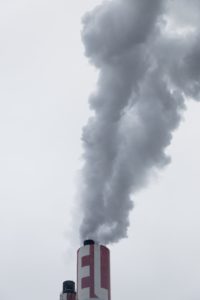
“The carbon tax does not work.” In fact, it does and it has. B.C. has had a carbon price for over a decade, a decade during which it reduced its emissions and led Canadian provinces in economic growth, and prosperity. Carbon pricing has also proved effective in Europe and the U.K., without damaging the economy.
The Conservatives’ video ad claims the Liberals’ carbon tax will increase the cost per litre of gasoline by 22.5 cents (plus HST). In reality, the Liberal’s current plan would only increase the cost by 11 cents per litre by the year 2022.
Clean Energy Canada is also accusing the Conservatives of misrepresenting its research — the ad cites the British Columbia think tank as one of its sources. Dan Woynillowicz, policy director for Clean Energy Canada, says their numbers were taken out of context.
From a Global News report:
“When asked to explain the numbers in the video ad, a Conservative Party spokesperson noted that the Liberals have committed to hitting Canada’s emissions targets under the Paris climate agreement and a report by the Parliamentary Budget Officer estimates that the current carbon tax would need to be five times higher (the equivalent of 22.5 cents per litre of gasoline) if Canada is to meet those targets.
“However, that estimate was based on a hypothetical assumption that the government would rely solely on a carbon tax in order to lower emissions, which none of the major political parties is proposing.
“‘On net, there actually isn’t an increase in the tax burden to Canadians,’ says Craig Alexander, chief economist at Deloitte Canada. ‘If you want to put a price on carbon and reduce its emissions but you don’t want to have a significant impact on the economy, you need to then rebate and refund all of the money that’s collected back into the local economy.’
“’If you care about the economy, then carbon pricing is absolutely the best way to reduce greenhouse gas emissions,’ says economist Dale Beugin with the Ecofiscal Commission, an economic think tank.
“He says a carbon tax is less expensive than other incentive-based programs, which reward individuals and businesses for reducing their carbon emissions.”
Deficits
“Trudeau’s deficits will cripple the economy.” In fact, the current deficit is one third what Harper’s Conservative government ran.
Conservatives around the world have proven to be poor economic managers. In Canada, Conservatives have not been able to balance the books since the early 60s. It took a Liberal government under Jean Chretien to balance the books in the late 90s.
Taxation
“Tax cuts will put more money in your pocket.”
Again, proven untrue. Mike Harris tried that in Ontario 25 years ago. Sure, it put more money into his pockets, and those of his cronies, allies and sponsors.
But for the rest of us, an income tax cut meant increases in property taxes (as provincial costs were “downloaded” to municipalities), as well as high user fees for things we never had to pay for, directly, before. It also resulted in longer waits in hospitals and for a range of other services. It led to libraries closing and larger school class sizes.
Employment
Conservatives at all levels are consistently opposed to increasing the minimum wage, saying it will kill jobs. The evidence is to the contrary. Jurisdictions across North America have increased minimum wages, and they’ve all had economic gains as a result. We can always find anecdotes about small businesses that could not afford to pay more for their workers, which to me is more of a sign of a shaky business model than a problem with paying people what they’re worth.
More evidence shows that, after adjusting for inflation, today’s minimum wage is still behind what it was in the 1970s.
Immigration and refugees

“There’s an illegal immigration crisis at the border!” Scheer and his cronies cry. No, there is not. There never has been.
Yes, there are refugees who break a law by coming through an irregular border crossing. But we force them to. And of all those who have come through that way, how many have caused a single problem once they arrived here?
Canada accepted 30,000 to 40,000 refugees from Syria, all why conservatives screamed about the “threat” they posed. The refugees have been here for three years now. What problems have they caused? None.
Housing
The Conservatives propose bringing back 30-year mortgages and scrapping the mortgage stress test as a way to make housing more affordable. In fact, anyone can see that those measures will only make housing more expensive.
A longer mortgage means borrowers will end up paying much more for their house over the lifetime of the mortgage. The idea of the mortgage stress test was to make sure that home buyers will still be able to afford their monthly payments when interest rates go up—as they inevitably will, sooner or later.
The net effect of these measures will be to increase demand for mortgages and buying houses, which, as we know from Economics 101, increases prices.
There’s only one sure way to reduce the cost of housing: increase the supply. In other words, build more houses.
Pharmacare

The Conservatives have rejected pharmacare for all, saying it would be too expensive. This ignores the fact that, collectively, we already pay more for our drugs than we would through government with pharmacare.
Conservatives love to say “we can’t afford it” about every proposed step forward. It reminds me of the words of my father-in-law: “They said there was no money for medicare. There’s no money to help people. But when war comes, there’s always money for that.”
Another lie: Conservatives insist that the Liberals plan to legalize all hard drugs. Conservatives in B.C. have produced fake ads to that effect. Yet the Liberals have not said a single word about that.
Oil pipelines
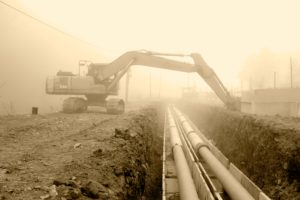
Conservatives insist on building more pipelines. That will create thousands of jobs. For a while. Once the pipelines are built, we’ll be right back to where we are now. Doubtlessly with Alberta whining for yet more pipelines and subsidies.
Canada already has pipelines from Alberta clear across the country. Conservatives and the oil industry want to build more. The Liberals are providing tax dollars to do exactly that.
Here’s where they’re both lying: it is impossible to reduce carbon emissions by drawing more fossil fuel from the ground. Just as you cannot lose weight by consuming more calories.
The oil and gas industry’s claim of achieving “net zero carbon emissions” in the next few years applies only to the production of oil and gas. Consuming it only produces carbon dioxide and water.
To be fair, the Liberals make this same claim. It’s the same nonsense.
There is more. Much more. But this post is already getting long.
Vote rationally

I intend to vote on October 21. To vote rationally. To look at evidence. At what works, what has been proven to work.
I wish everyone would do the same. That way, we might see some real progress in this country.