


You may have noticed that I’ve been posting and announcing about the number of manuscripts I’ve been editing lately. am editing a lot of fiction these days.

The latest books edited by The Written Word to be published

Amnesia
By D.G. Torrens
Cassie is suffering from trauma-induced amnesia. Weekly visits to her psychologist are proving challenging until fragments from the night of her attack begin to surface. Cassie spirals into a dark hole of fear and confusion – Pandora’s box spills open, revealing contents that she is ill-prepared for. Her nightmares are worsening. Her fear intensifies. The truth is imminent…
Find it on:
- the author’s website
- coming soon: When Death Strikes

Gateway
By David C. Cassidy
Two-time award-winning author David C. Cassidy delivers another terrifying supernatural thriller of the darkest evil, exploring the blackest depths of human frailty and shocking brutality–and draws back the curtain to reveal the monsters inside of us.
Find it on:
Coming soon:

When Death Strikes
Eva Driscoll thriller #4
By Alan McDermott
Eva Driscoll and Simon ‘Sonny’ Baines are living the good life. They have money and each other, but most importantly, their enemies think they are dead.
Their new life is shattered when a bar room brawl thrusts them back into the spotlight, and they must evade a psychotic cartel boss and his skilled tracker if they are to survive. But those are not the only dangers they face. Eva and Sonny must battle their way through unforgiving landscapes, but just when they think they are safe, their world turns upside down once more.
Find it on:
These manuscripts span a wide range, from romances to mysteries to personal memoirs. Even so, I notice a number of common characteristics. Some of them drive me crazy.
The most common are incorporating too many inconsequential details, head-hopping, adding unnecessary auxiliary verbs, and that nasty problem, the passive voice.
Let’s dive deeper.
This week, let’s look at inconsequential details.
Have a read of this, paraphrased from some of the manuscripts I’ve edited recently.
Johnnie and Blanche walked back inside in silence. He ran into his bedroom and returned with a note book. He prodded Blanca towards the couch and straightened out the edge of his rug which slightly curled. He’d need to buy a new rug. His throat was parched and his stomach tight with disgust. He couldn’t believe his mother wasn’t here to set thing straight.
“My god, Johnnie. Your mother was involved in this all those years ago? Are you okay?”
He ignored her question as he skimmed through what looked like a journal. “What do you have there?
Or this one:
She shrugged her coat off her shoulders, letting it slide down her arms, then folded it and draped it over the back of one of Debbie’s wooden kitchen chairs.
Or
He turned his head slightly to look in the rear-view mirror, where he saw the black SUV looming off his rear bumper.
Of course you have to turn your head slightly to look in the rear-view mirror.

Why is this a problem? Because it slows down the story.
Readers are smart. They know you have to let a coat slide off your arm, or turn your head to look in the side-view mirror.
Details help bring the reader into the scene and make it more realistic and believable. Details like colour, sound and especially smell. Details like emotions and physical feelings—tension, anxiety, fast breathing, pounding heart.
But details about every little secondary action required to do something just slow down the story. Readers are smart enough to know the little actions it takes to take off your coat or check in the rear-view mirror.
Let’s try that first example again:
Johnnie ignored her question, ran into his bedroom and returned with a notebook. He prodded Blanche to the couch.
“What do you have there?” she asked.
He took a moment to straighten a curl at the edge of the rug. His throat was parched and his stomach tight with disgust. He couldn’t believe his mother wasn’t here to set things straight.
This is more effective at bringing the scene to life, with far fewer words to slow down the story.
Lesson: bring the scene to life with enough detail for readers to feel like they’re there, but keep the action moving.
Next week, we’ll dive deeper into the problem, and the challenge of head-hopping.
Till then:
Don’t try to publish a book without an editor.
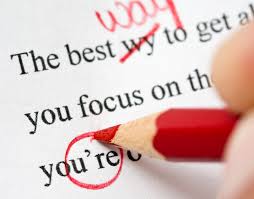
Are you writing a book? Or any kind of longer text? Need some advice? Feel free to email or message me with any questions: scott@writtenword.ca.
And if you have finished your manuscript, please contact me about editing it before you take any other steps, like submitting it to a publisher or agent.
Mention this blog, and I’ll give you $100 off the editing fee.
In the immortal words of the mortal Stan Lee, excelsior!